
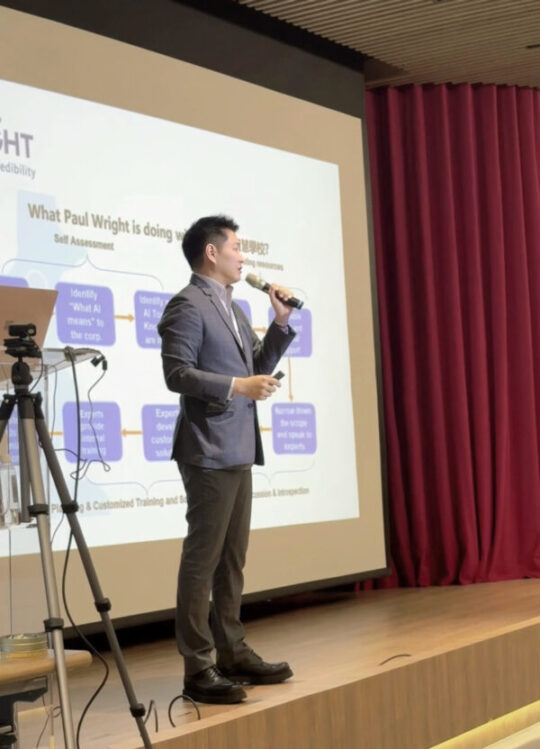
 Jay Hsu, Founder of Paul Wright AI Solutions, holds dual U.S. legal qualifications and has built his career across executive search and enterprise advisory. Working directly with business owners, senior executives, and key decision-makers, he understands the balance organizations must maintain between talent, performance, accountability, and risk. Having played a role in critical stages of organizational growth, talent retention, and institutional design, he recognized early that most companies are not unaware of AI’s importance—they struggle to identify the path that enables AI to be effectively operationalized and deliver measurable results.
Through these practical experiences, he repeatedly observed a common pattern: AI initiatives are often fragmented into disconnected efforts. Training is assigned to HR, project development to IT or external vendors, while governance and risk are addressed only after implementation. This division frequently creates communication gaps, making the systems built by technical teams difficult to operationalize and limiting AI’s ability to generate clear business value.
From these cases, he came to a clear conviction: when AI adoption fails, it most often fails because of people—not the technology itself.
This insight became the foundation for Paul Wright AI Solutions. From the outset, the firm chose to take on one of the most challenging and least assumed responsibilities—helping organizations conduct systematic assessments, evaluations, and analyses before adoption to identify the right entry points for AI. This approach simultaneously incorporates training and addresses the inevitable human, operational, and governance considerations that follow. Our focus is not only on whether a project can be completed, but on whether the organization retains real capability afterward and continues to empower those who use AI.
For this reason, Paul Wright AI Solutions has always viewed AI as a tool for strengthening organizational capability rather than a one-time technical initiative. From identifying the right talent, to developing that talent, to amplifying human value through AI, we aim to close the gap where AI is most likely to fail—yet most critical to long-term competitiveness.
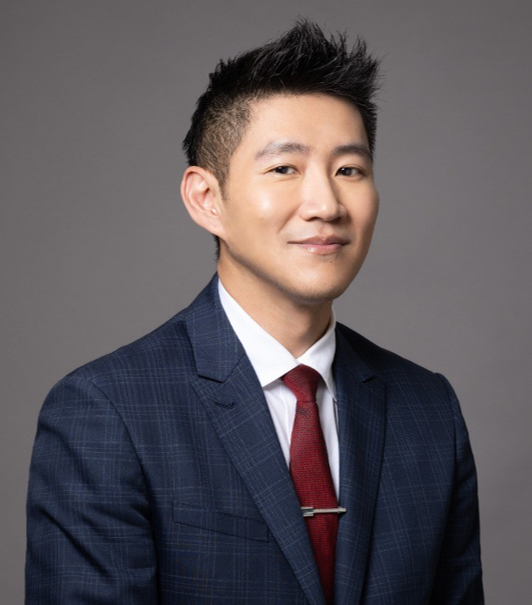
Jay Hsu
Jay has built his career within the executive search industry and the realities of enterprise leadership, partnering directly with business owners and senior decision-makers. He understands the practical trade-offs organizations face across talent, performance, accountability, and risk. In his experience, the greatest concern surrounding AI adoption is rarely the technology itself, but what might happen after implementation. He brings a decision-level perspective that helps organizations clarify accountability, define risk boundaries, and assess their capacity to absorb change.

Claire Chang
Claire comes from a background in deep technical implementation and enterprise training. She has long been dedicated to software development and the practical adoption of generative AI, working closely with frontline users to embed AI into everyday workflows. She understands that if technology cannot integrate into real work or be sustained by the people who use it, even the most advanced solutions will not become lasting organizational capability. As a result, she places strong emphasis on user experience, workflow redesign, and whether people are truly able to sustain change.